
Local SEO for Hospitals: Get More Patients in 2026 | Digital Medico
When people need medical care, one of their first steps is often searching online. They may look for the best hospital nearby, a specialist in their area, or a clinic that offers a particular treatment.Searches such as “best hospital near me,” “orthopedic doctor in Hyderabad,” and “dental clinic near me” show how important local search has become for healthcare providers.
For hospitals, clinics, and independent medical practitioners, appearing in relevant local search results can make it easier for potential patients to discover their services. This is where Local SEO for hospitals and clinics becomes valuable.
A well-planned local SEO strategy helps healthcare businesses improve their visibility on Google Search and Google Maps, provide useful information to patients, and build a stronger digital presence.
What Is Local SEO for Hospitals and Clinics?
Local SEO, or local search engine optimization, is the process of improving a business’s visibility in search results for location-specific queries.
For example, when someone searches for “multispecialty hospital in Hyderabad” or “dermatologist in Gachibowli,” Google may display relevant websites, Google Maps results, and local business profiles.
Hospitals and clinics can improve their chances of appearing for relevant searches by optimizing their online information and website content.
Local SEO for healthcare businesses generally includes:
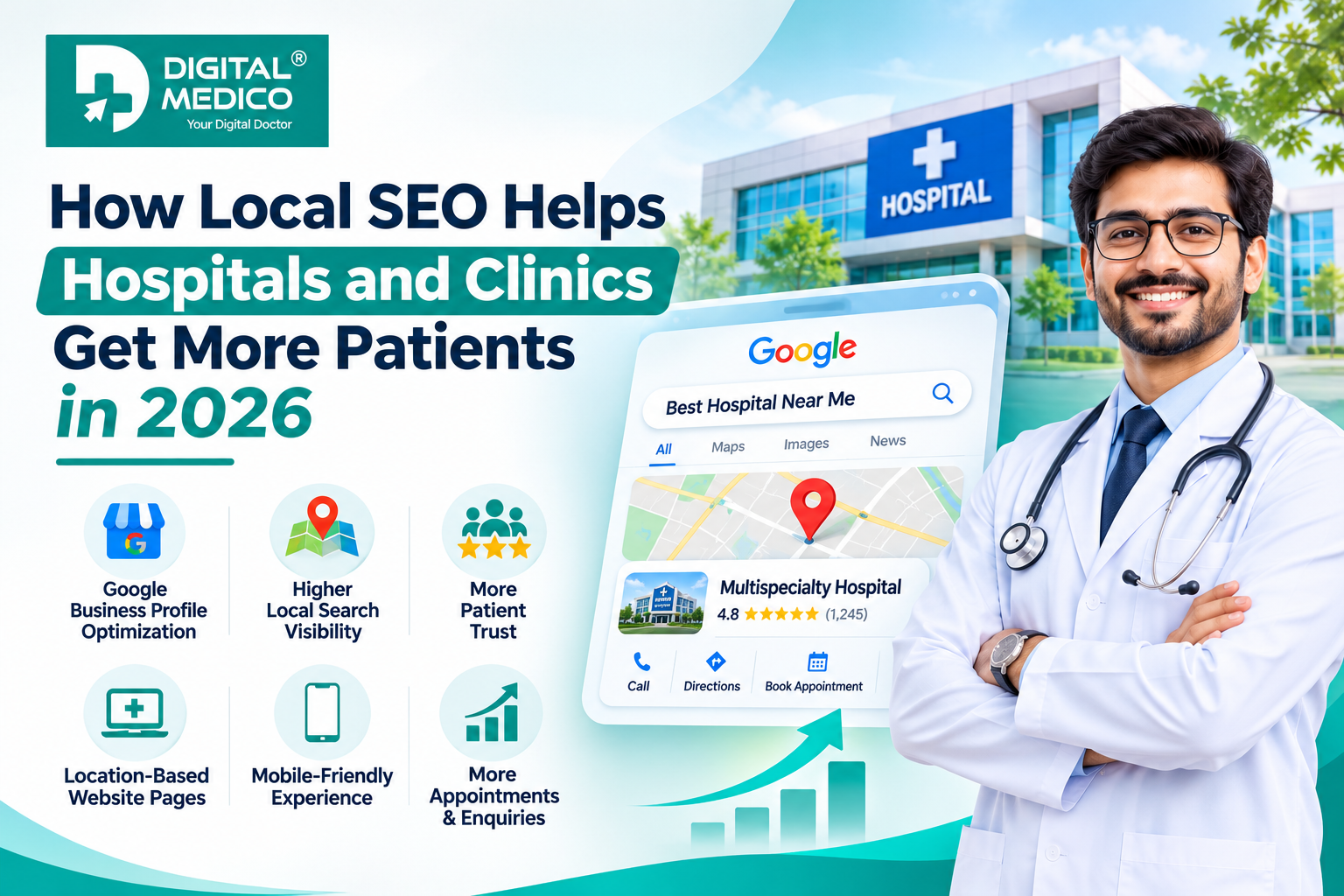
Google Business Profile optimization
Location-based keyword research
Healthcare website optimization
Local business directory listings
Patient review management
Mobile-friendly website development
Relevant healthcare content creation
These activities help search engines understand a healthcare provider’s location, specialties, and services.
Why Is Local SEO Important for Hospitals and Clinics?
1. Improve Visibility in Local Google Search Results
Patients frequently search for medical services within a specific area. They may look for hospitals close to their homes, clinics near their workplaces, or specialists in a particular neighbourhood.
Optimizing website content and business information for relevant location-based searches can help healthcare providers improve their local search visibility.
Examples of healthcare-related local keywords include:
Best hospital in Hyderabad
Multispecialty hospital in Gachibowli
Best gynecologist near Kondapur
Dental clinic in Madhapur
Orthopedic hospital near me
Hospitals and clinics should target keywords that accurately represent their medical specialties, services, and actual locations.
2. Optimize Your Google Business Profile
Google Business Profile is an important tool for healthcare providers who want to appear in Google Search and Google Maps.
A complete and accurate profile makes it easier for patients to find essential business information before visiting or contacting a hospital.
Important profile elements include:
Correct hospital or clinic name
Accurate business address
Updated contact number
Working hours and holiday timings
Medical services and specialties
Website and appointment booking link
Relevant photographs
Regular business updates
Genuine patient reviews
Healthcare providers should review their profiles regularly and correct outdated information. Accurate details help potential patients understand where the facility is located and how to contact it.
3. Build Online Trust Through Genuine Patient Reviews
Before choosing a hospital or clinic, many patients consider online reviews and ratings as part of their decision-making process.
Reviews can provide insight into patient experiences, communication, facilities, and other aspects of healthcare services.
Hospitals and clinics can strengthen their online reputation by:
Encouraging genuine feedback from patients.
Responding professionally to reviews.
Addressing concerns through appropriate channels.
Monitoring reviews across relevant platforms.
Following patient privacy and confidentiality requirements.
Healthcare providers should never publish private patient information in public responses or offer incentives for misleading reviews.
A consistent review management process supports a more credible online presence.
4. Create Location-Specific Healthcare Website Pages
Hospitals operating in multiple areas should provide clear information about each location on their website.
For example, a healthcare organization with branches in Hyderabad can create dedicated pages describing the services available at each facility.
A useful location page can include:
Hospital or clinic address
Available medical departments
Doctor and specialist information
Facilities and treatment information
Contact details
Appointment booking options
Frequently asked questions
Directions and nearby landmarks
Each location page should contain accurate, useful, and unique information. Creating several pages with almost identical content and only changing the city name may not provide value to visitors.
5. Make Your Healthcare Website Mobile-Friendly
Patients often use smartphones to search for hospitals, doctors, treatments, and appointments.
A website that works smoothly on mobile devices makes it easier for visitors to access healthcare information.
Important mobile website features include:
Fast page loading
Clear menus and navigation
Easy-to-read medical information
Click-to-call contact options
Simple appointment enquiry forms
Accessible address and directions
Secure browsing experience
A mobile-friendly website improves usability and makes it easier for potential patients to take the next step.
Healthcare SEO Strategies Hospitals Should Follow in 2026
Local SEO works best when combined with a broader healthcare SEO strategy. Hospitals should focus on the following areas to improve their online presence.
Keyword Research for Medical Services
Identify the terms people use when searching for hospitals, doctors, specialties, and treatments.
Include relevant location-based phrases where appropriate. Avoid targeting unrelated keywords simply because they appear to have higher search volume.
On-Page SEO
Optimize important website elements, including:
SEO titles and meta descriptions
Main headings and subheadings
Healthcare service descriptions
Image alt text
Internal links
Relevant location information
Each page should clearly explain the medical service or information it provides.
Technical SEO
Technical SEO helps search engines access and understand website content.
Hospitals should regularly review:
Website loading speed
Mobile usability
HTTPS security
XML sitemap
Robots.txt configuration
Broken links
Indexing status
Canonical URLs
Structured data where appropriate
These improvements help maintain a technically accessible website.
Healthcare Content Marketing
Publishing useful and medically responsible content can help hospitals answer common patient questions.
Potential content formats include:
Medical specialty guides
Doctor introduction pages
Treatment information
Hospital facility guides
Patient preparation information
General health education articles
Frequently asked questions
Medical content should be accurate, reviewed by qualified healthcare professionals where appropriate, and should not promise guaranteed treatment outcomes.
Local Citations and Business Listings
A local citation is an online mention of a business’s name, address, and phone number.
Hospitals and clinics should maintain consistent business information across relevant directories and trusted business listing platforms.
Incorrect addresses, outdated contact numbers, and duplicate listings can confuse potential patients and make business information less reliable.
Common Local SEO Mistakes Healthcare Businesses Should Avoid
Even established hospitals and clinics can miss opportunities because of avoidable online visibility issues.
Common mistakes include:
Incomplete Google Business Profile information
Incorrect contact details across online directories
Duplicate or low-quality location pages
Slow-loading healthcare websites
Missing SEO titles and meta descriptions
Limited doctor and specialty information
Ignoring genuine patient reviews
Publishing outdated healthcare content
Using irrelevant location-based keywords
Not checking whether important website pages are indexed
Regular website and listing reviews can help identify these problems and improve the overall quality of a healthcare business’s online presence.
How Digital Medico Helps Hospitals and Clinics Grow Online
Digital Medico provides digital marketing solutions focused on the healthcare industry. Its services are designed to support hospitals, clinics, doctors, and other healthcare organizations in strengthening their digital presence.
Digital Medico’s healthcare-focused solutions include:
Healthcare Search Engine Optimization: Improve website structure, content relevance, and organic search visibility.
Google Business Profile Optimization: Maintain accurate business information and improve local search presentation.
Healthcare Website Development: Build professional websites that communicate medical services and make enquiries easier.
Social Media Marketing: Develop relevant social media content and campaigns for healthcare audiences.
Content Marketing: Create informative website content and healthcare-related articles.
Digital Advertising: Support targeted online advertising campaigns.
Branding and Creative Services: Develop consistent visual communication for healthcare businesses.
By combining these services with a suitable digital strategy, Digital Medico helps healthcare organizations strengthen their online presence and make their services easier to discover.
Conclusion
Local SEO is an important part of online visibility for hospitals, clinics, and independent healthcare professionals in 2026.
From optimizing Google Business Profile and creating useful location pages to improving website performance and managing genuine patient reviews, each activity contributes to a stronger local digital presence.
Healthcare providers should focus on accurate information, helpful content, a user-friendly website, and a consistent local search strategy rather than relying on keyword placement alone.
Digital Medico helps hospitals and clinics develop healthcare-focused digital marketing strategies to strengthen their online presence.
Ready to improve your hospital or clinic’s online visibility?
Visit: https://www.digitalmedico.in/
Contact: +91 99667 56143
Email: info@digitalmedico.in
Frequently Asked Questions
1. What is Local SEO for hospitals?
Local SEO helps hospitals improve their visibility in location-based Google searches and Maps results, making it easier for nearby patients to discover their services.
2. How does SEO help clinics attract more patients?
SEO helps clinics appear for relevant searches, provide useful information about their services, and make it easier for potential patients to contact them or request appointments.
3. Is Google Business Profile important for hospitals?
Yes. Google Business Profile allows hospitals to display their address, contact information, operating hours, services, website, and patient reviews in Google Search and Maps.
4. How long does healthcare SEO take to show results?
SEO results vary depending on website condition, competition, location, content quality, and the consistency of optimization efforts. Meaningful improvements generally require ongoing work over several months.
5. Why should hospitals work with a healthcare digital marketing agency?
A healthcare-focused digital marketing agency can help hospitals develop strategies around medical services, patient communication, website visibility, content creation, local search, and online reputation.
6. What are the most important local SEO factors for clinics?
Important areas include an accurate Google Business Profile, relevant local website content, consistent business listings, genuine patient reviews, mobile usability, and clear information about medical services and locations.
7. Can a hospital improve its Google Maps visibility?
Hospitals can work on their Google Business Profile, maintain accurate location information, select appropriate business categories, add relevant services, and build a consistent online presence. Local ranking is influenced by relevance, distance, and prominence, so results cannot be guaranteed.